

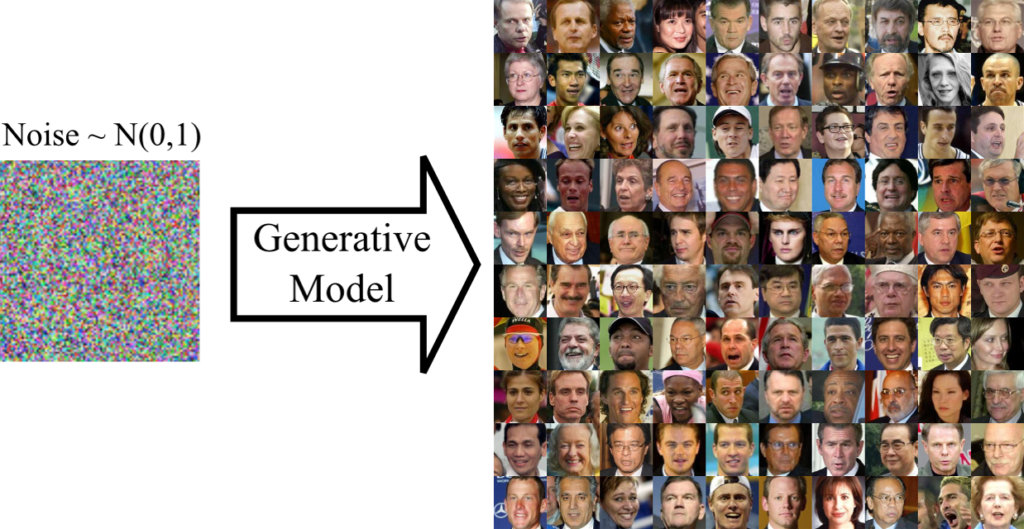
GAN – generative adversarial model – how AI teaches itself
Good background on Deep learning
•Each month, it seems, deep neural networks, or deep learning, as the field is also called, spread to another scientific discipline. They can predict the best way to synthesize organic molecules. They can detect genes related to autism risk. They are even changing how science itself is conducted. The AIs often succeed in what they do. But they have left scientists, whose very enterprise is founded on explanation, with a nagging question: Why, model, why?
•That interpretability problem, as it’s known, is galvanizing a new generation of researchers in both industry and academia. Just as the microscope revealed the cell, these researchers are crafting tools that will allow insight into the how neural networks make decisions. Some tools probe the AI without penetrating it; some are alternative algorithms that can compete with neural nets, but with more transparency; and some use still more deep learning to get inside the black box. Taken together, they add up to a new discipline. Yosinski calls it “AI neuroscience.”
Sarah Sanders says God wanted Trump to be president
31 January 2019
- – – – – – – – – – – – – – — — – — — – – – — – — — – — – —— – — — – — – – – – – – —— — – —
evangelicalism, fundamentalism, pentecostalism
Lord of the Zombi’s !
Sara Sanders says “God wanted Donald trump to be president”
To punish us?
And so did Vladimir Putin
Sara Sanders says “he has done a tremendous job supporting things that people of faith wanted”
Jesus was a Palistinian Jew whose life was his message
Poor, courageous, generous and noble
But gripped in the crucible that would become America
His spirit burned for Confederate cause
southern white religious leaders used the the scriptures to justify slavery against abolitionist criticism.
now the Zombi American Jesus
wispers in Sarah’s ear
What he whispered to the slaves
that power is righteous and redemption for all others would be in heaven.
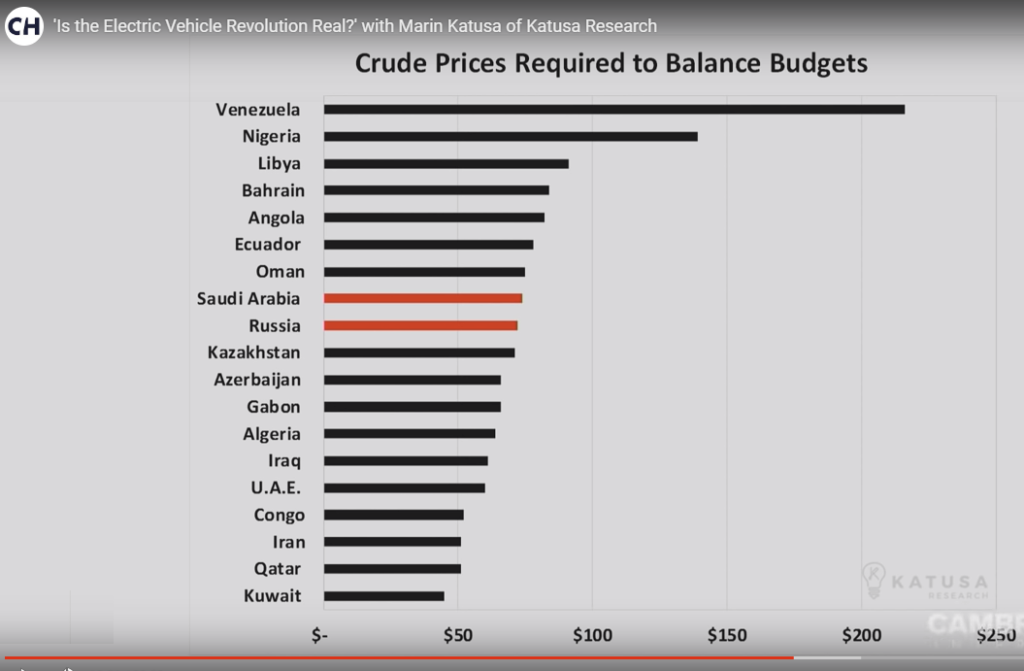
Is the Electric Vehicle Revolution Real?
Earliest filmed Americans
In 1929 this documentary interviewed people in their 80’s and up. Average life span at that time was probably in the 40’s or 50’s so these are rare beings given their age and the times they were in.

Quantum Computing for Everyone
Quantum computing explained in 5 levels of difficulty – kids to experts
Nested bubbles.. an excellent crash course in economics, the Fed, US debt, inflation and (ultimately) sustainability.. Peakprosperity
“An imbalance between rich and poor is the oldest and most fatal ailment of all republics.” – Plutarch.
“There is no means of avoiding the final collapse of a boom brought about by credite expansion. The alternative is only whether the crisis should come sooner as a result of a voluntary abandonment of further credit expansion or later as a final and total catastrophe of the currency system involved” – Ludwig von Mises
Looking into AI
Best programming language?
Depends on what you want to optimize.
If you know what you’re doing, want the fastest code possible, and do not care about optimizing development time, then assembly is the best. If you want function abstraction and named variables with your assembly, use C and accept a small runtime vs. development time tradeoff. If you want object abstraction, use C++ and accept a larger runtime vs. development time tradeoff. If you want automatic garbage collection, use a garbage-collected language (Java, C#) and accept a larger runtime vs. development time tradeoff. For the same applications you’ll want more memory as well. (I’ve been told you can run Java programs at the same speed as the equivalent C++ programs if you have 80% more memory.)
If you want a language with an easy learning curve and great libraries, use Python an accept a huge runtime vs. development time tradeoff. If you are doing web programming, you should probably use something like Python for your backend language. (It’s also possible to use Java, Ruby, or even Go.)
If you are looking for specialized routines, then MATLAB/Fortran (scientific computing) or R/Stata (statistical analysis) may be most powerful for you.
There are functional languages (categorized as such because they have higher-order functions, partial application, and all that jazz) all along this spectrum. Conventional wisdom says that with functional languages you accept a runtime vs. development time tradeoff, but the more familiar you are with the language, the less the tradeoff is.
If you are choosing the most powerful language to learn, I would recommend learning a statically typed functional language like OCaml or Haskell. While learning something like Python will have the highest immediate payoff because of the shallow learning curve and its abundant library support, learning a functional language will teach you to think about programming in ways that make you more effective in all languages. For instance, working with algebraic data types and pattern matching in a strongly typed language teaches you to reason explicitly about what your data should look like and helps you organize your code in languages as low-level as C. Having constructs such as higher-order functions, algebraic data types, polymorphic functions, and type classes (for organizing overloading polymorphism) in your mental toolbox can make you a much more powerful programmer. A downside of many of these languages is that there is only a small community that uses them–hence lack of tool and Q&A support.
Scala lives in a nice sweet spot of providing functional features while having a healthy and growing community using it for development code.